
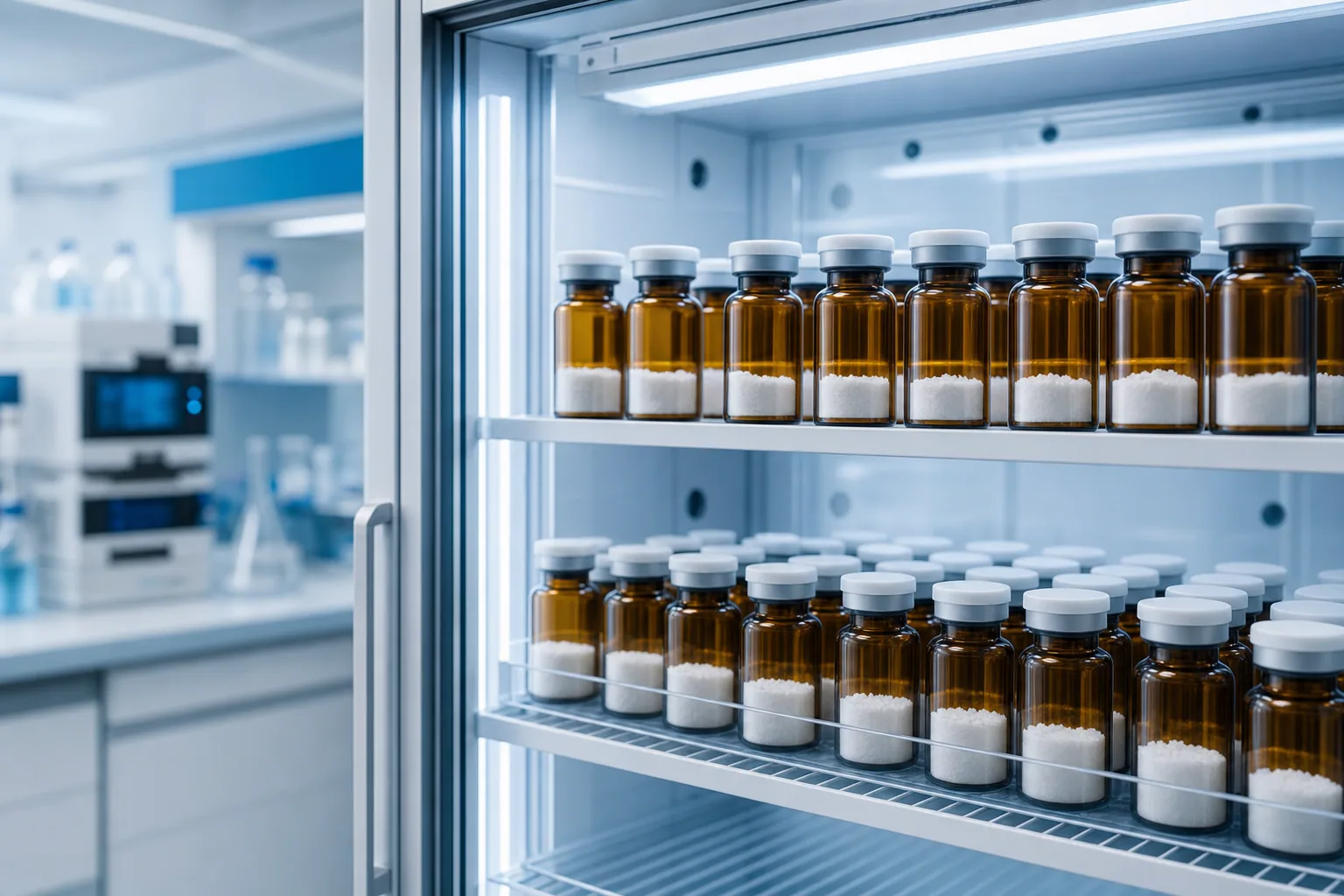
Lyophilized peptides are a cornerstone of modern laboratory research, but their stability depends entirely on how they are stored after arrival. Improper storage can lead to degradation, loss of purity, and compromised research results. Understanding the fundamentals of peptide storage will protect your investment and ensure the integrity of your experimental work.
Why Storage Conditions Matter for Peptide Integrity
Lyophilized peptides are freeze-dried compounds engineered to be stable in powder form. However, they remain susceptible to environmental stressors like moisture, heat, and light exposure. When stored incorrectly, peptides can absorb water from the air, leading to hydrolysis and molecular breakdown. Temperature fluctuations accelerate degradation, while UV light can trigger chemical changes that alter the compound's identity and purity. Maintaining strict storage conditions preserves the batch specifications documented in your Certificate of Analysis and ensures reproducible results across experiments.
Peptydlab designs every batch with stability in mind, backed by HPLC purity testing and mass spectrometry identity confirmation. However, once a vial arrives at your facility, your storage protocol becomes the next critical control point. The quality standards we establish in the laboratory can only be maintained if the compound is protected from environmental degradation.
Temperature Control and Cool Storage
The most important factor in lyophilized peptide storage is temperature control. Most research-grade peptides should be stored in a freezer maintained between -20 and -80 degrees Celsius. Freezing halts molecular movement and slows degradation pathways to negligible rates.
For long-term archival storage spanning months or years, -80°C ultra-low freezers provide optimal protection. For shorter-term research projects lasting weeks to a few months, a standard -20°C freezer is typically sufficient. Some peptides may tolerate brief periods at room temperature, but this should be minimized and only during necessary handling steps.
Key considerations for temperature management:
- Keep freezers dedicated to peptide storage when possible, avoiding frequent door openings that introduce warm air and temperature swings
- Use freezers with reliable thermostat controls and temperature monitoring alarms
- Avoid repeated freeze-thaw cycles, which can denature proteins and introduce moisture into vials
- Store vials in the interior of the freezer, away from the door where temperature fluctuations are greatest
Moisture Control and Humidity Management
Water is the enemy of lyophilized peptides. Once rehydrated, peptides become vulnerable to hydrolysis, enzyme activity (if present), and microbial contamination. Even small amounts of atmospheric moisture absorbed during storage can compromise batch purity.
Store peptides in airtight, sealed containers. Glass vials with tight-sealing caps are standard. Never leave vial caps loose or partially open. When opening a vial for sampling, work quickly and reseal immediately. If you need to remove peptide powder multiple times, consider aliquoting the batch into smaller working portions so you minimize exposure of the main stock.
In humid climates or facilities with poor environmental controls, store vial containers inside desiccant-containing storage boxes. Silica gel packets or molecular sieves absorb ambient moisture, creating a dry microenvironment around your samples. Replace desiccants regularly as they lose effectiveness over time.
Light Exposure and Packaging
Ultraviolet and visible light can trigger photochemical reactions in peptides, altering their molecular structure and reducing batch purity. This degradation may not be immediately obvious but accumulates over time.
Store peptides in amber or opaque containers that block light transmission. Peptydlab provides vials designed to minimize light penetration. Keep storage containers in a dark space, away from direct sunlight and laboratory lights. Internal freezer storage naturally provides darkness, but if you maintain a dedicated peptide refrigerator or cabinet at warmer temperatures, ensure it is kept in a light-protected area or shielded with opaque covers.
Handling and Documentation Practices
Proper storage extends beyond environmental conditions. How you handle vials during retrieval and use also affects long-term stability.
Always wear gloves when handling peptide vials. Skin oils and contaminants transferred by bare hands can introduce moisture and compromise purity. Use sterile technique when opening containers, especially if you plan to resample the same batch multiple times over months.
Maintain detailed records of storage location, temperature monitoring, and handling dates. Cross-reference each vial with its batch number and Certificate of Analysis. Peptydlab includes QR codes on product vials that link directly to batch-specific documentation, making it easy to verify storage requirements and check the original purity specifications. This traceability supports both quality control and regulatory compliance in your laboratory.
Storage Duration and Stability Windows
Lyophilized peptides are inherently stable, but they do not remain viable indefinitely. Most research-grade peptides maintain their documented purity specifications for 12 to 36 months when stored properly at -20°C or below. Ultra-low freezer storage at -80°C can extend this window further.
Before conducting experiments, verify the manufacturing date on your vial and compare it to the expected stability window for your batch. If you have stored peptides for an extended period, consider requesting a fresh batch or conducting identity and purity confirmation testing before using the compound in critical research work.
Store peptides in a dark location away from heat sources and moisture, and always maintain consistent temperatures to preserve batch integrity and research reproducibility.
Setting Up Your Peptide Storage Protocol
Implementing a robust storage system takes planning but pays dividends in research quality and consistency.
Start by auditing your laboratory's existing cold storage capacity. Ensure freezers are functioning reliably, have backup power systems, and include temperature monitoring. Dedicate one freezer exclusively to research peptides if your budget allows, minimizing disruption from other laboratory materials.
Create a standardized inventory system that documents each peptide vial by batch number, storage location, and date received. Include this information in your laboratory notebook or digital database. Before each experiment, verify that the peptide has been stored correctly and remains within its documented stability window.
When ordering research peptides, verify that your supplier provides clear storage instructions and batch documentation. Peptydlab delivers products with full Certificates of Analysis and QR-accessible batch records, supporting transparency and reproducibility in your work. This documentation helps you confirm that conditions at your facility align with the specifications established during manufacturing and testing.
Proper storage of lyophilized peptides is not an afterthought but a critical component of laboratory quality control. By maintaining appropriate temperature, humidity, and light protection, you ensure that the high-purity compounds you source remain reliable tools for your research. Consistent storage practices also support batch-to-batch reproducibility, which is essential in fields like orthopedics, neurology, oncology, and other areas where precision and accuracy define research success.