
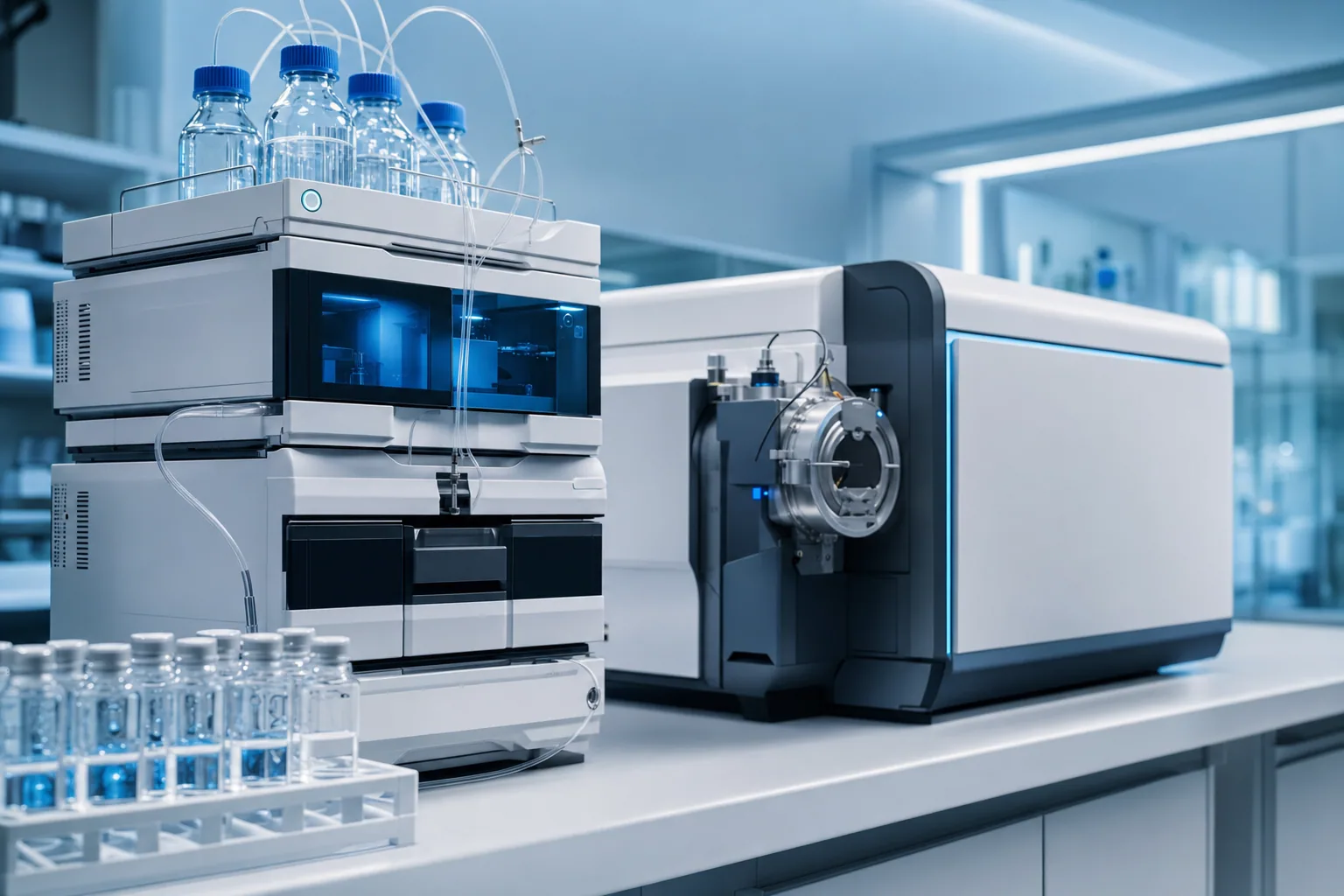
Why Analytical Verification Matters in Peptide Research
When a research team builds an experiment around a peptide compound, the reliability of every data point depends on one foundational assumption: the compound is what it claims to be, at the purity level stated. If that assumption is wrong, results become difficult to reproduce, comparisons across studies lose meaning, and time is wasted chasing variables that were never truly experimental.
Two analytical techniques sit at the center of peptide quality verification: High Performance Liquid Chromatography (HPLC) and Mass Spectrometry (MS). Both are standard tools in serious laboratory environments, and both serve distinct but complementary purposes. Understanding what each method actually measures helps researchers ask the right questions when evaluating a supplier.
What HPLC Measures and How It Works
HPLC is a separation technique. A dissolved sample is pushed through a column packed with a stationary phase under high pressure, and different components travel through the column at different rates based on their chemical interactions with that phase. A detector, often UV-based, records a signal as each component exits the column.
The result is a chromatogram: a series of peaks where each peak represents a distinct chemical species. For peptide purity assessment, the area of the target peptide peak is compared against the total peak area across the run. This ratio gives a purity percentage.
HPLC is particularly valuable because it is quantitative. It can detect related impurities, truncated sequences, oxidized variants, and residual reagents from synthesis. A compound might appear structurally sound but carry a measurable percentage of these byproducts. Without HPLC, that contamination remains invisible.
Key things HPLC purity testing can reveal:
- The relative percentage of the target compound versus total detectable species
- The presence of synthesis byproducts or degradation products
- Consistency across production batches when run under identical conditions
- Whether a compound has degraded during storage or transit
What Mass Spectrometry Adds to Identity Confirmation
Mass Spectrometry approaches the question differently. Where HPLC tells you how pure a sample is, MS tells you what it actually is. The technique ionizes molecules and measures their mass-to-charge ratio, producing a spectrum that functions like a molecular fingerprint.
For peptides, the molecular weight calculated from the amino acid sequence can be predicted precisely. When an MS spectrum matches that predicted value, the identity of the compound is confirmed. This is critical because a high purity score on HPLC does not, on its own, rule out the possibility that a highly pure but incorrect compound is present.
Consider a scenario where a synthesis error produces a consistent but wrong sequence. HPLC might show a single clean peak with high purity, because only one dominant species is present. MS would catch the discrepancy immediately by comparing the observed molecular mass against the expected value.
The combination of the two methods closes both verification loops: purity and identity are confirmed independently, and together they give researchers a much stronger foundation for trusting a compound.
Why Batch-Level Documentation Connects to These Methods
Running HPLC and MS on a single sample batch is useful. Running them on every production batch and tying those results to traceable documentation is what makes quality control meaningful over time.
Batch-level documentation means that when a researcher orders a compound today and again in six months, they can compare the analytical data for both lots. If purity numbers are consistent and molecular identity is confirmed on both batches, reproducibility becomes far easier to defend. If results vary, that variation is at least visible and documented rather than hidden.
At Peptydlab, every batch is assigned a unique batch number and paired with a Certificate of Analysis that captures the results of HPLC purity testing and mass spectrometry identity confirmation. Each product vial includes a QR code that links directly to the batch-specific COA, so researchers can access that documentation at any point, not just at the time of ordering. You can review what this verification process looks like through the Certificate of Analysis documentation Peptydlab maintains for its products.
Practical Differences Between the Two Techniques
Both methods are essential, but they are not interchangeable. Here is a straightforward comparison of what each one brings to peptide verification:
HPLC:
- Measures purity as a percentage of the target peak relative to all detectable species
- Detects impurities, related substances, and degradation products
- Provides quantitative data about compound composition
- Does not confirm molecular identity on its own
Mass Spectrometry:
- Confirms the molecular identity of the compound by matching observed mass to expected mass
- Can detect incorrect sequences even when purity appears high
- Does not provide a percentage breakdown of related impurities in the same way HPLC does
- Works most powerfully when used alongside HPLC data
For research applications where reproducibility and accuracy are required, using one method without the other creates a gap in the verification record. A purity number without identity confirmation, or identity confirmation without a purity assessment, each leaves questions unanswered.
What Researchers Should Look for in a Supplier's QC Process
Not every peptide supplier applies the same analytical standards, and the difference matters in practice. When evaluating sourcing options, researchers benefit from asking specific questions about documentation.
A credible quality control process should include:
- HPLC data expressed as a percentage purity with identifiable peaks on the chromatogram
- Mass spectrometry data showing the observed molecular mass and comparison to the theoretical value
- Batch-specific documentation, not generic or representative certificates
- Accessible records, whether through a QR code, a downloadable PDF, or a verifiable online record
- Consistency across multiple orders, with documentation that allows direct comparison between batches
If a supplier cannot provide batch-level COAs that include both HPLC and MS data, the verification record has gaps that may become significant when experimental results need to be defended or replicated.
Products like Epitalon 50mg from Peptydlab are documented with this level of traceability, giving laboratory professionals the records they need to source compounds with confidence.
Building Research Confidence Through Verified Compounds
HPLC and mass spectrometry are not competing techniques. They answer different questions, and together they provide the kind of analytical foundation that serious research work requires. Purity percentages tell you how clean a compound is. Molecular identity confirmation tells you what that compound actually is. Neither question is optional when accuracy and reproducibility are at stake.
Peptydlab's approach centers on providing both, documented at the batch level and accessible through traceable records. If you are sourcing research peptides for laboratory or analytical work and want to review the quality documentation behind each product, reaching out to Peptydlab is a straightforward next step.