
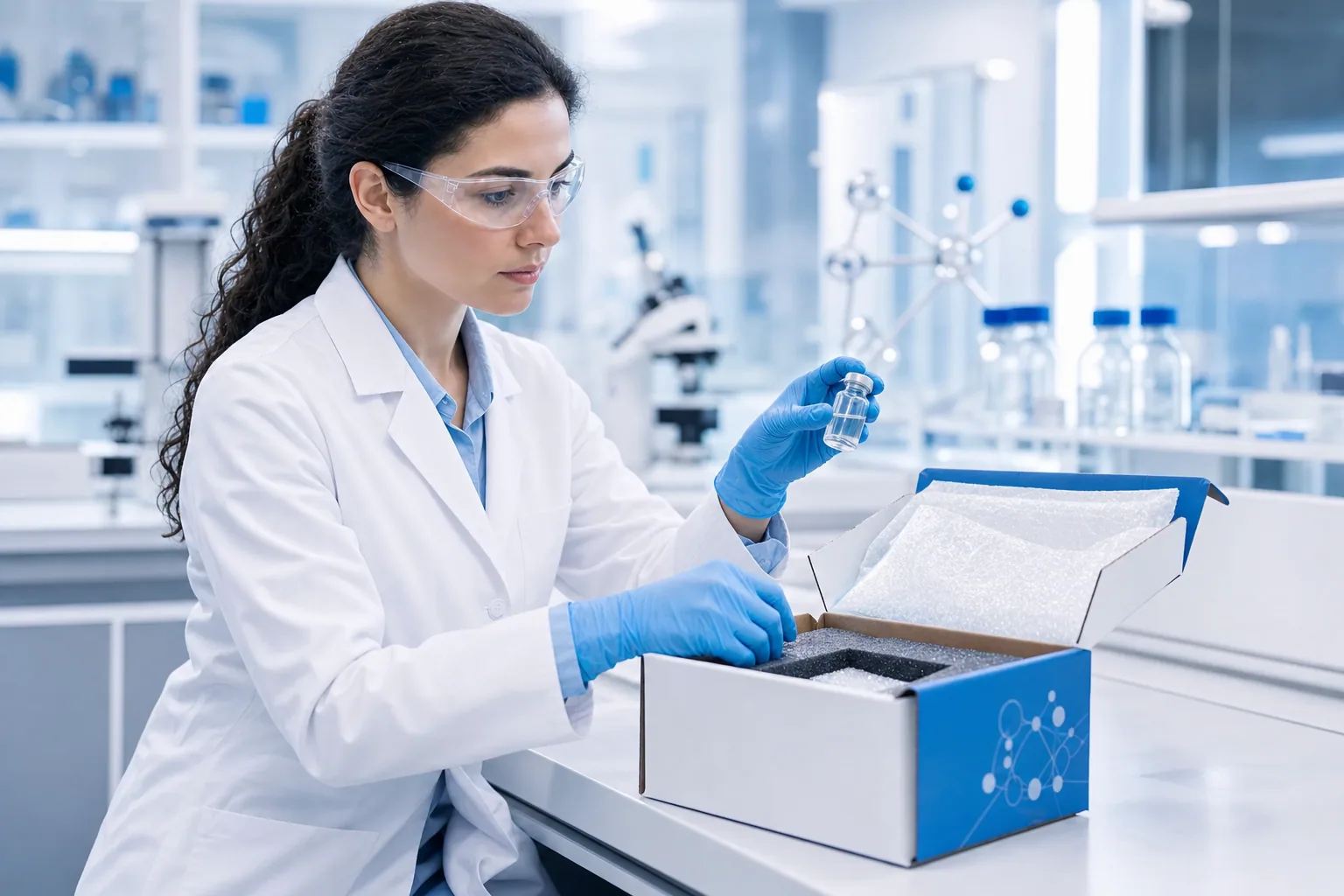
Understanding Peptide Stability Challenges
Research peptides are complex molecules that require careful attention during every stage of their journey from laboratory to your facility. Unlike simpler chemical compounds, peptides can degrade when exposed to temperature fluctuations, light, moisture, and physical stress. Understanding these vulnerabilities is the first step toward protecting your research materials and ensuring data reproducibility.
When peptides degrade during transit, the resulting compounds may no longer accurately represent the original specifications. This introduces variables into your research that have nothing to do with your experimental design. For researchers working in fields like neurology, orthopedics, and oncology, where precision is non-negotiable, this level of compromise is unacceptable.
Peptydlab addresses these challenges through controlled packaging and distribution protocols designed to maintain compound integrity from production through delivery. Each product is carefully handled to preserve the purity and stability that HPLC testing and mass spectrometry confirmation have already verified.
Temperature Control in Transit
Temperature is one of the most significant threats to peptide stability. Most research peptides maintain their chemical structure best within a narrow temperature range. Exposure to heat can accelerate degradation, while freezing cycles can alter crystalline structure and reduce potency.
Proper shipping requires:
- Climate-controlled packaging that insulates against external temperature swings
- Selection of shipping carriers with temperature-monitored options when needed
- Expedited delivery timelines that minimize exposure duration
- Protective wrapping and phase-change materials that buffer temperature fluctuations
When peptides like Epitalon or Oxytocin are shipped, every hour in transit matters. The longer a compound sits in an uncontrolled environment, the greater the risk of degradation. Peptydlab prioritizes fast, protected shipping to reduce this window of vulnerability.
Moisture and Environmental Protection
Moisture is another critical threat to peptide integrity. Hygroscopic peptides actively absorb water from the air, and even small amounts of moisture can initiate unwanted chemical reactions. Additionally, exposure to light, particularly UV radiation, can degrade certain peptide structures over time.
Compounds are protected through:
- Sealed vials with inert nitrogen or argon atmosphere to exclude oxygen and moisture
- Opaque or amber-colored containers that block harmful light wavelengths
- Desiccant packets placed in shipping containers to absorb any stray moisture
- Sealed packaging that prevents air exchange during transport
These measures work together to create a stable microenvironment around each product. The goal is simple: what arrives at your laboratory should match the specifications documented in the Certificate of Analysis that was generated at the time of production.
Handling Protocols Upon Receipt
Stability is not just about what happens during shipping. How you handle peptides when they arrive sets the tone for their performance in your research. Proper receiving and storage procedures extend the active life of your compounds and maintain their documented purity.
When your order arrives:
- Inspect packaging for signs of damage or temperature exposure
- Verify batch numbers match your Certificate of Analysis documentation
- Store compounds immediately in appropriate conditions (typically 2-8 degrees Celsius or as specified)
- Keep vials sealed until ready for use to minimize air exposure
- Use clean, dry equipment for any handling or preparation
- Document storage conditions in your laboratory records
Each of these steps contributes to preserving the integrity Peptydlab established during manufacturing. Peptides stored improperly after arrival can degrade just as readily as those exposed to harsh conditions in transit.
The Role of Documentation in Stability Assurance
Documentation serves a critical purpose beyond compliance. Your Certificate of Analysis provides a baseline snapshot of compound specifications at the moment of production. This record becomes your reference point for understanding whether any changes in your experimental results stem from compound degradation or from actual experimental variables.
Peptydlab includes QR-code-accessible batch records with every shipment. These records contain HPLC purity data, mass spectrometry identity confirmation, and batch-specific information. Having immediate access to this documentation allows you to verify that the compound you received matches the specifications at the time it left the laboratory.
If you notice unexpected results or have concerns about compound stability, you can reference your batch documentation to establish a baseline. This transparency supports reproducibility and helps isolate variables in your research.
Storage Best Practices for Long-Term Stability
Most research peptides maintain their integrity best under cool, dry conditions. The exact requirements vary by compound, but general best practices apply across most peptide storage scenarios.
Optimal storage conditions typically include:
- Temperature range of 2-8 degrees Celsius for most research peptides
- Protection from light in a dedicated storage area
- Separation from volatile chemicals or materials that could contaminate
- Low humidity environments or dedicated storage with desiccant packets
- Sealed containers that remain unopened until the compound is needed
When peptides are stored properly from the moment of receipt, degradation is minimal. Many compounds maintain their documented specifications for months or longer when storage conditions are respected. Conversely, improper storage can lead to significant degradation within days.
Documenting your storage conditions is as important as documenting your experimental results. If you maintain a log of temperature and humidity levels in your storage area, you create an audit trail that demonstrates you preserved compound integrity. This documentation becomes valuable if you need to explain or troubleshoot unexpected research findings.
Coordination Between Supplier and Researcher
Peptide stability is a shared responsibility between supplier and researcher. Peptydlab handles the production, testing, and initial protection. From the moment your order ships, the responsibility for maintaining stability transfers to you.
This partnership works best when communication is clear. If you have specific stability concerns, temperature requirements, or environmental challenges at your facility, discuss them with your supplier. If you receive a shipment and notice anything unusual about packaging or condition, report it immediately.
Peptydlab's commitment to transparency extends beyond documentation. The goal is to support researchers with materials and information that allow you to focus on your work with confidence. When you receive a peptide with verified purity and supporting documentation, and you store it properly, you can trust that your experimental results reflect the accuracy of your protocol rather than the variability of your materials.
Conclusion
Peptide stability during shipping and handling is a practical concern with real implications for research quality. By understanding the vulnerabilities of these compounds and implementing appropriate protective measures, you safeguard both your materials and your data. Peptydlab supports this goal through controlled packaging, rapid distribution, and accessible documentation. When you pair our commitment to stability with your own careful handling and storage practices, you create the conditions for reproducible, reliable research.