
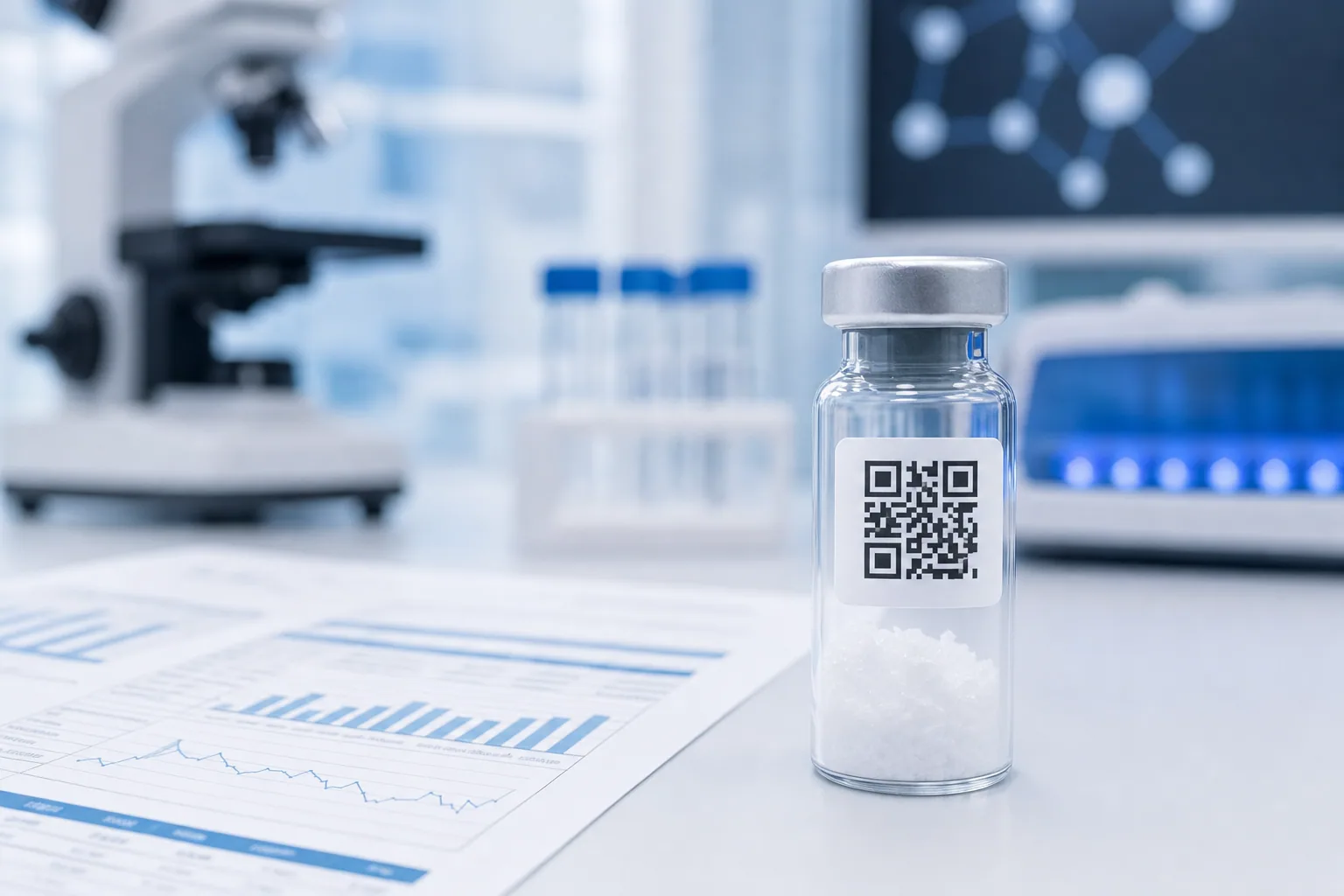
When you order research peptides from Peptydlab, each product vial arrives with a unique batch number printed on the label. That number is not just an inventory code. It is a direct link to your compound's identity, purity profile, and complete quality history.
Batch numbers are a cornerstone of scientific integrity and reproducibility. Understanding what they represent and how to use them will strengthen your confidence in the materials you work with and support the rigor of your research.
What a Batch Number Actually Represents
A batch number is a unique identifier assigned to a specific production run of a peptide compound. Every vial bearing the same batch number originated from the same manufacturing session and underwent identical testing protocols.
Peptydlab assigns a unique batch number to every production batch. For example, a vial labeled "EPI-2603-19" tells you exactly which manufacturing cycle produced that Epitalon sample, when it was made, and which test results apply to it.
This is not generic quality assurance language. The batch number is your entry point to verifiable, batch-specific documentation. Without it, you have no way to confirm what testing was performed on your exact supply or to link your results to a traceable source.
Traceability and Reproducibility
Reproducibility is the foundation of rigorous research. If you achieve a result using Epitalon from batch EPI-2603-19 and want to replicate that work, you need to know if you are using the same material with identical purity and composition.
Batch numbers make this possible. They allow you to:
- Verify that two orders contain peptides from the same production run
- Track your work back to the exact material specifications
- Compare results across multiple experiments using identical source material
- Document your methodology with precision in published research or regulatory submissions
When a researcher references a batch number in lab notes or published work, they are anchoring their findings to a specific, verifiable compound profile. This is how science builds on itself.
How Batch Numbers Connect to Quality Control
Every batch number at Peptydlab corresponds to a complete quality control record. That record includes:
- HPLC purity testing results
- Mass spectrometry identity confirmation
- Manufacturing dates and conditions
- Analytical test summaries
These tests are not performed on a generic representative sample. They are performed on the exact batch that was shipped to you. The batch number is your proof of that connection.
When you see a batch number like "KISS-2603-14" on your Kisspeptin vial, you can be confident that this specific material has been tested and verified to meet Peptydlab's published quality standards.
Accessing Your Certificate of Analysis
Peptydlab makes batch documentation instantly accessible through QR codes on product vials. Every vial includes a QR code that links directly to the Certificate of Analysis for that specific batch.
Your Certificate of Analysis includes:
- Batch number and production date
- Purity percentage from HPLC testing
- Mass spectrometry confirmation of peptide identity
- Any relevant impurity profiles
- Storage and handling recommendations
- Laboratory contact information
This is how transparency works in practice. You do not have to email customer service or wait days for documentation. You scan the code, and the batch-specific test results appear immediately.
Keeping Batch Records in Your Lab
Proper documentation of your peptide orders will strengthen the scientific and regulatory defensibility of your work. When you receive a peptide shipment, record the batch number in your lab inventory system alongside:
- Date of receipt
- Intended research application
- Storage conditions
- Expiration or retest date
- Link to or printed copy of the Certificate of Analysis
This simple step creates an audit trail. If you later need to verify what material was used in a specific experiment, that record is immediately available. If a regulatory body or peer reviewer asks about your source material, you can provide batch-specific quality documentation within seconds.
Organizations working in orthopedics, neurology, oncology, or other regulated research fields find this practice essential. It demonstrates procedural rigor and support for your conclusions.
Batch Numbers and Multi-Order Research
If your research spans months or years and requires multiple orders of the same peptide, batch numbers help you understand whether material consistency may affect your conclusions.
Suppose you order Oxytocin for a multi-phase study. Your first shipment might arrive as batch OXY-2603-07 with 98.5% purity, and a second order six months later as batch OXY-2603-22 with 98.2% purity. Both batches meet quality standards, but the difference is documented and visible to you.
This transparency allows you to:
- Account for minor variations in your analysis
- Understand whether batch-to-batch consistency is relevant to your findings
- Communicate methodological details accurately in publications or reports
Reliable suppliers like Peptydlab maintain tight batch-to-batch consistency, but the batch number system lets you verify this for yourself rather than relying on marketing claims.
Why Batch Numbers Matter More Than You Might Think
Batch numbers are often overlooked in procurement. Buyers focus on price, compound name, and quantity. Batch documentation gets filed and forgotten.
But batch numbers are where scientific accountability lives. They are the proof that quality control was real, that testing was specific, and that your material is linked to verified data. In fields where reproducibility and accuracy are non-negotiable, that matters.
Peptydlab's approach to batch documentation reflects an understanding that researchers do not want hype or generic assurances. They want to know exactly what they are working with, backed by data they can access and verify on demand.
When you order from Peptydlab, every batch number is your gateway to that transparency. Use it, document it, and build your research on a foundation of verified, traceable peptide compounds. That is how rigorous science gets done.